The short answer
Yes, you can mix ranger cabins, a rooftop tent and the odd hotel with home swaps and keep working, with planning. Home swaps (you stay in another member's home while someone stays in yours) cover the long stretches with real workspaces. Cabins, a tent and hotels fill the gaps and reach places swaps do not. The work holds up if you bring your own power and connectivity and keep your home computer reachable.
Cabins and lookouts run by the US Forest Service, the federal agency that looks after the national forests, are reserved through Recreation.gov, the government's booking site for public land. Amenities vary from cabin to cabin, so check each listing for electricity and water. I'm Kevin Luten, and I write Field Office, my guide to working remotely from more interesting places. I have completed 8 stays (56 nights) through Kindred, a members-only home-swapping club, and hosted 14 guests in my own home.
How I stitch a trip together
How do the pieces fit? October 2025 is a good example:
- Oct 9, 2025 to Oct 12, 2025: a Kindred home swap in Salt Lake City's Sugar House neighborhood, 3 nights, with a monitor and a standing desk listed.
- Oct 15, 2025 to Oct 17, 2025: Jumpup Cabin, a Forest Service cabin in the Kaibab National Forest in northern Arizona, 2 nights, with no electricity, no running water and no cell service.
- October 20, 23 and 26: day-use permits for the Tuweep area of Grand Canyon National Park, on the remote North Rim side.
Picture it: a city swap with a real desk at one end and a dry cabin on a canyon rim in the middle. That is the pattern this page is about.
Ranger cabins
What is a ranger cabin? It is a rustic cabin on public land (or, in some cases, a fire lookout) that the US Forest Service rents to the public by the night.
Booking
As of November 2026, Forest Service cabins and lookouts are reserved online at Recreation.gov (USDA Forest Service, Pacific Southwest Region).
The Forest Service's Northern Region says you need a credit card to reserve, and you can book up to six months in advance, first come, first served. Rates and maximum stays vary by cabin, and there is a non-refundable recreation fee (USDA Forest Service, Northern Region). Booking windows can differ by facility, so check the cabin's own Recreation.gov page.
What to expect
Each cabin's listing sets out what is there. Some have electricity, heat and a stove, and others have none of those. Running water and bedding vary too.
The Forest Service suggests checking the forest's website or calling the nearest office before you plan a trip. Assume no mobile signal until you know otherwise.
Working from a cabin
So how do you work with no electricity? On batteries: a portable power station (a big rechargeable battery with ordinary outlets), with a solar panel to top it up, covered in off-grid power for remote work. And with no signal? On Starlink, a satellite internet service, which is covered in Starlink for unusual places.
Jumpup Cabin: Kaibab National Forest, AZ
Oct 15, 2025 to Oct 17, 2025, 2 nights. Near Fredonia, on the rim of Jumpup Canyon.
Historic two-room log cabin (on the National Register of Historic Places) at 5,500 feet, looking over the Kanab Creek Wilderness. Bunk room with two double-over-double bunks; wood stove for heat. No electricity, running water or propane, and no cell service once you leave Fredonia (per the Recreation.gov listing).
The listing says to bring your own water and firewood. The last stretch is on unpaved Forest Service roads (high clearance recommended, a working spare essential in a rental), and Lower Jumpup Spring is a quarter mile down the Ranger Trail. Outside there is a composting toilet, a fire ring and a picnic table, and it is pack-it-out, meaning you carry all your trash home (Jumpup Cabin on Recreation.gov, checked November 15, 2026).
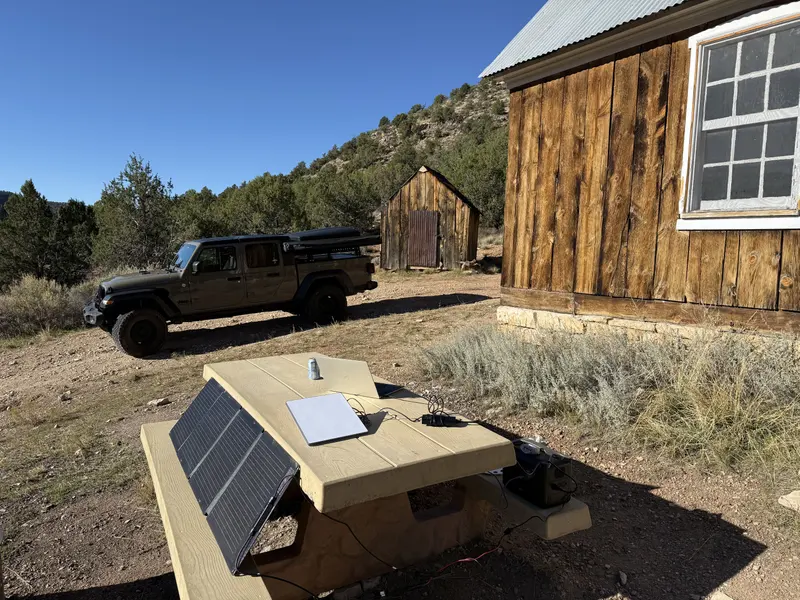
So where does the laptop charge? For working, this is the hard case: every watt and every byte has to arrive with you.
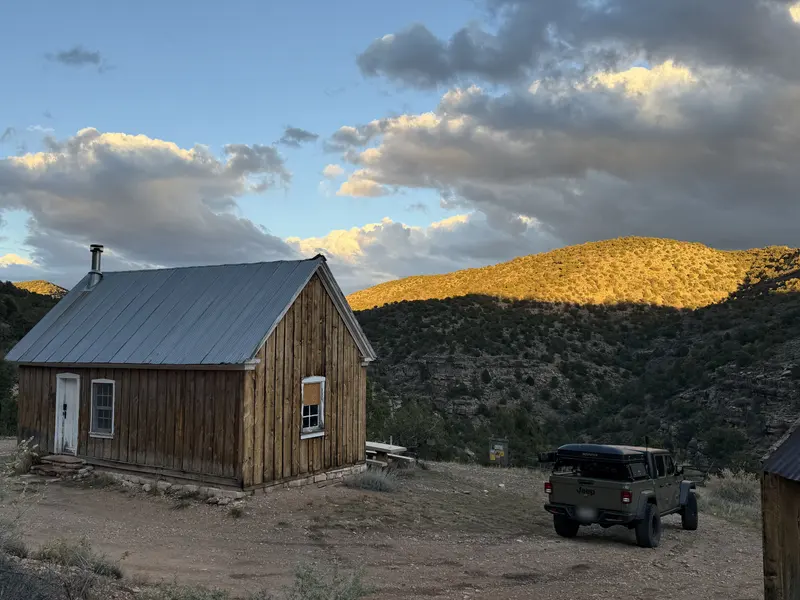
My answer to the no-power, no-signal problem was to bring both. I set up Starlink, a folding solar panel and a portable battery on the picnic table outside the cabin.
Sunlight Ranger Cabin: Shoshone National Forest, WY
Jun 27, 2026 to Jun 30, 2026, 3 nights. Sunlight Ranger Station, about 40 miles northwest of Cody.
Three-room log cabin at the Sunlight Ranger Station in Sunlight Valley, sleeping up to eight, with a full kitchen, indoor bathroom and fireplace. Grizzly country. Has electricity. The phone is for emergencies only, and the Recreation.gov listing shows no cell service.
Guests bring their own bedding, towels and food, clean before leaving, and store every cooler and attractant properly because grizzlies frequent the area. No pets. Reservations are online only, with no walk-ins (Sunlight Rangers Cabin on Recreation.gov, checked November 15, 2026).
For working, this is the easier case: having electricity solves half the problem, and only connectivity has to come with you.
American Prairie, Montana: sleeping where the bison are coming back
American Prairie is a nonprofit assembling a connected reserve in north-central Montana. It buys private ranches and stitches them to the public land around them, with the long-term aim of 3.2 million acres (about 5,000 square miles).
It also rents a small set of huts, cabins and campsites to the public. That is how you get to stay inside the project rather than drive past it (American Prairie: Bison Restoration).
The bison part of the story
Plains bison numbered in the millions before they were nearly wiped out in the late 1800s. American Prairie brought them back to its land in 2005, after an absence of more than 120 years.
How are they doing now? Its own page puts the situation plainly: bison are listed as near threatened, and fewer than 10 percent of the bison left in North America are managed for conservation or as wild animals.
- The herd passed 1,000 in 2026. American Prairie's annual calf count put it at 1,016 animals, reported in October 2026 (Good News Network, October 16, 2026).
- The near-term goal is 5,000, the minimum viable population for a wild herd named in the Vermejo Statement, a set of bison restoration goals written by bison experts. The full 3.2-million-acre vision could eventually support tens of thousands.
- The genetics are unusually clean. A 2025 study by the US Geological Survey (USGS) found relatively high genetic diversity, low inbreeding and no obvious signs of cattle genes in the herd (USGS).
- Bison are why the prairie works. Ecologists call them a keystone species, meaning one the rest of the prairie relies on. Their grazing, wallowing and trampling make the patchwork of grass heights and wet hollows that prairie birds such as Sprague's pipit and Baird's sparrow depend on.
- It is not settled. In Montana the herd is still legally livestock. In May 2026 the Bureau of Land Management, the federal agency in charge of the public land around the reserve, revoked American Prairie's bison grazing permits. On September 4 a federal judge granted a preliminary injunction blocking the order to remove bison from three federal allotments while the case goes on.
Support American Prairie's bison restoration
This is a straight donation link to American Prairie, not a referral. I earn nothing from it. Facts above are as of November 15, 2026, and the permit case is ongoing.
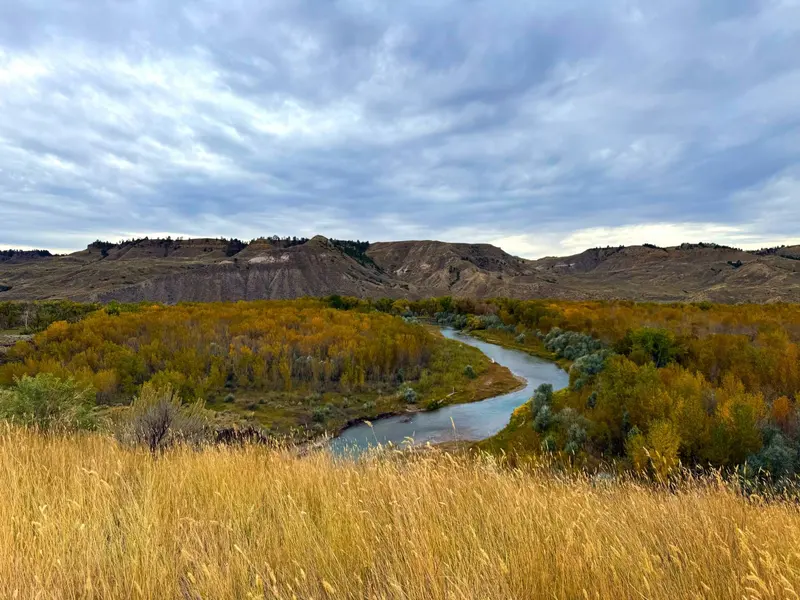
John and Margaret Craighead Hut
The PN property, near Judith Landing where the Judith River meets the Missouri. The PN is one of American Prairie's properties. Booked through Hipcamp, a website for booking campsites and cabins.
Three yurts joined by enclosed hallways in a cottonwood grove by the Judith River: four bunkrooms sleeping nine, a kitchen with a solar-powered fridge and propane stove, a composting toilet. Solar power runs the utilities; the one outlet for guests charges nothing bigger than a phone. Bring your own water (per American Prairie).
As of the 2025 season it ran from late April to late November at $178 a night for the whole hut, with a seven-night maximum. Late in the season the last 1.25 miles are walk-in or bike-in only (American Prairie: Myers Family Huts). Check the current season before planning.
And for working? It sits between Jumpup and Sunlight: real walls and a kitchen, but the power is for the fridge and the lights, not your laptop.
Antelope Creek Campground cabin
Off US 191, north of the Missouri River and the Fred Robinson Bridge.
One of a handful of small climate-controlled cabins at American Prairie's most accessible campground: air-conditioned in summer, heated in the shoulder seasons, with showers and drinking water at the campground. It is the easiest of American Prairie's places to reach. The cabins fill quickly, so book early (Antelope Creek Campground on Hipcamp).
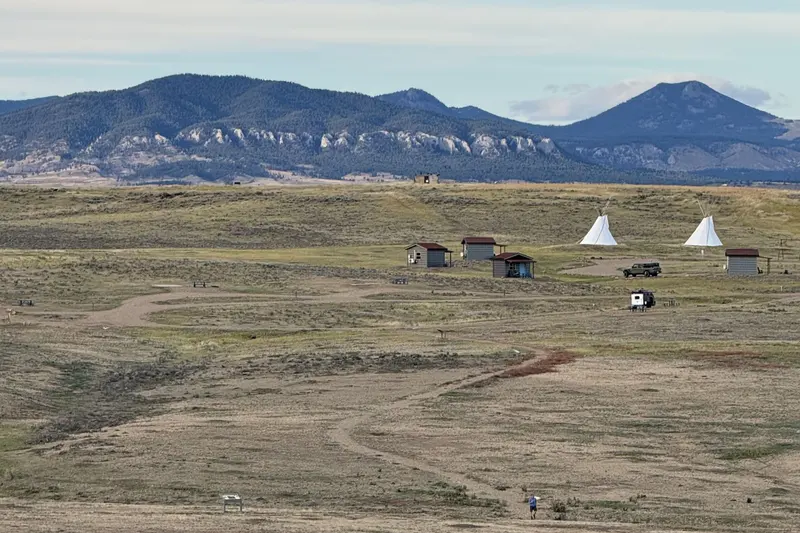
The rooftop tent
A rooftop tent folds onto a vehicle's roof rack and opens into a sleeping platform wherever you can legally park the vehicle.
When a hotel wins
Hotels are the predictable option: a bed, a desk of some kind, and staff to call when the Wi-Fi drops. They are useful on the nights a swap or a cabin cannot cover.
I'll admit I use them less and less. As I've gotten older and traveled a lot for work, I've come to dislike hotels, because a hotel makes any trip feel like a work trip. For a conference in Philadelphia I stayed in a Kindred apartment in one of the city's oldest neighborhoods instead, walked to the conference, and paid far less than a hotel would have cost.
How do you pay for those nights? That is in paying for hotel nights with points.
The setup that makes it work
The off-grid parts of a trip depend on three things working without you thinking about them:
- Power: a portable power station, such as one from EcoFlow's River series, and a solar panel, such as Goal Zero's, sized for a laptop and a satellite dish. See off-grid power for remote work.
- Connectivity: Starlink where there is no mobile signal. See Starlink for unusual places.
- Your home computer, left on and reachable, for the file that did not sync. See keep your home computer reachable from anywhere.
On the map
The ranger cabins and the American Prairie stays are on the homepage map as green markers, alongside the Kindred stays:
- Jumpup Cabin, Kaibab National Forest, AZ: Oct 15, 2025 to Oct 17, 2025, 2 nights.
- Sunlight Ranger Cabin, Shoshone National Forest, WY: Jun 27, 2026 to Jun 30, 2026, 3 nights.
- John and Margaret Craighead Hut, American Prairie, MT: dates to come.
- Antelope Creek Campground cabin, American Prairie, MT: dates to come.
- Rooftop tent: locations to come.
The home swaps themselves are in the stay log, and the case for swapping is in home swapping as a homeowner.
Cabin and tent write-ups are coming
Jumpup, Sunlight and the rooftop-tent trips will each get their own write-up. Want to know when? Get a note when they go up.
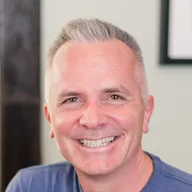
About the author. Kevin Luten is a long-time remote worker and Kindred home-swap host based in Atlanta. He has hosted 14 guests in his home and works from home swaps, ranger cabins and the occasional hotel. He founded the behavioral-science consultancy Behavior Design Works, is a Cialdini Certified Practitioner, and has spent about 28 years in transportation demand management. He writes Field Office. More about Kevin.